Healing Without Harm
Reflecting on Weight Stigma Awareness Week
This past week marked Weight Stigma Awareness Week (WSAW), an annual reminder of the deep impact that anti-fat bias has on people’s lives. The theme this year, “Healing Without Harm: Ending Weight Stigma in Healthcare,” shines a light on an issue that affects millions of people every day. Often silently, often painfully.
What is Weight Stigma?
Weight stigma is the discrimination, judgment, or negative assumptions directed toward people based on body size. Sometimes it shows up in overt ways: cruel comments, social exclusion, or denial of opportunities. Other times, it’s more subtle but equally harmful: a doctor assuming all health concerns come down to weight, or a therapist overlooking how shame about body size can shape someone’s mental health.
At its core, weight stigma is rooted in anti-fat bias: the belief that smaller bodies are inherently better, healthier, or more worthy than larger ones. This isn’t just a personal belief system; it’s woven into healthcare, media, workplaces, and even our closest relationships.
Why Weight Stigma Hurts
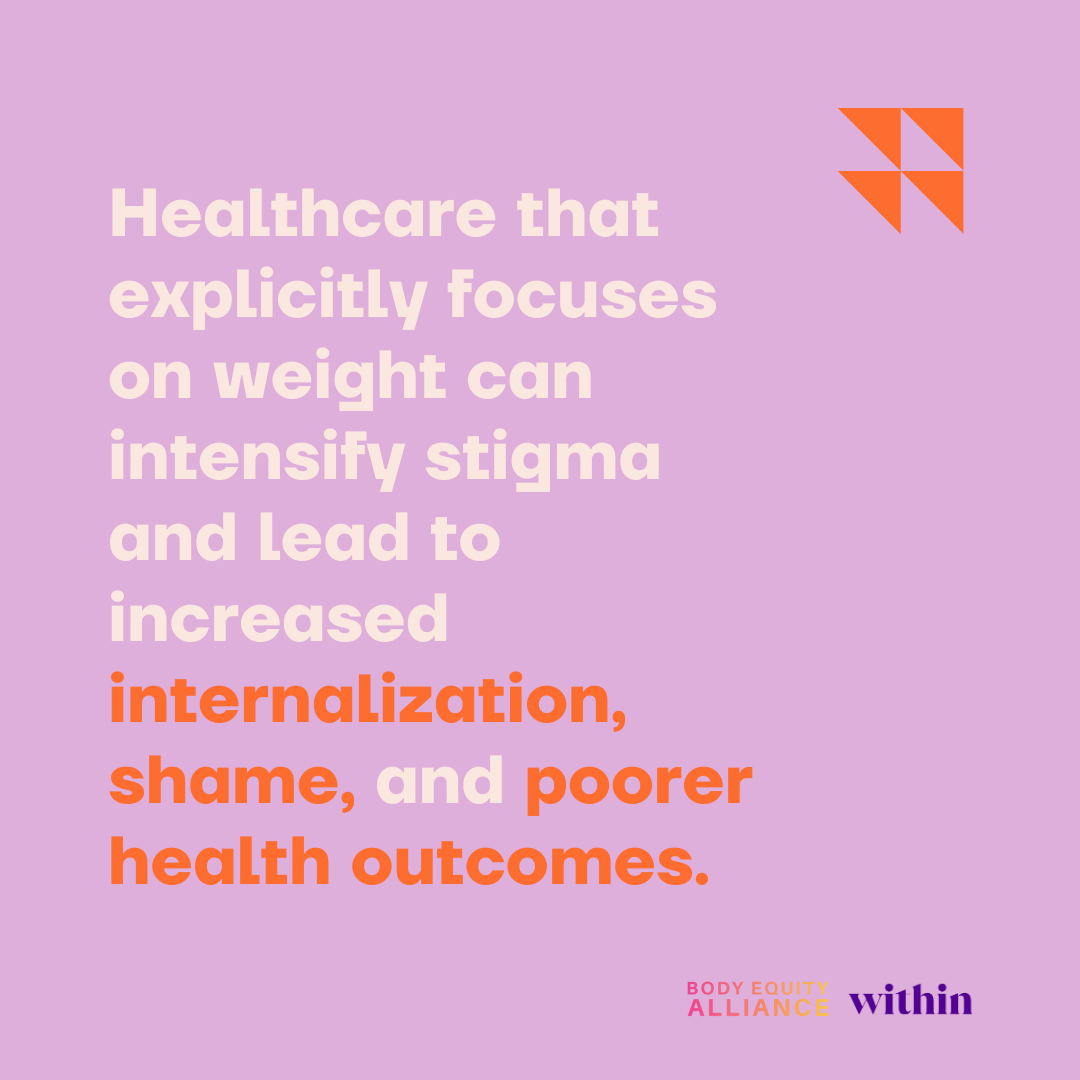
Experiencing weight stigma can take a profound toll on both physical and mental health. People who are shamed for their size are more likely to avoid going to the doctor, delay important screenings, or feel too anxious to seek care. This avoidance isn’t because they don’t care about their health, it’s because they’ve learned that medical spaces often don’t feel safe.
On a mental health level, repeated experiences of stigma can fuel anxiety, depression, body dissatisfaction, and disconnection from one’s own needs. When someone is told, directly or indirectly, that their body is “wrong,” it chips away at their sense of dignity and belonging.
Healing Without Harm
The call to “heal without harm” is simple but radical. It asks us to pause and consider: How do our words, assumptions, or practices impact others? For healthcare providers, it might mean slowing down to listen rather than defaulting to weight-focused advice. For therapists, it could be exploring how body image and stigma affect a client’s lived experience, without centering weight as a “problem to solve.”
For those of us navigating the healthcare system, it might look like giving ourselves permission to advocate. To ask for providers who respect us, to decline being weighed when it’s not medically necessary, or to bring a support person to appointments if that feels safer.
Healing without harm also means recognizing that bodies are diverse. Health does not have a single “look.” And every person deserves care that honors their humanity first.
Moving Toward Compassion
Ending weight stigma isn’t something that happens overnight. But awareness is a powerful first step. We can all practice noticing the ways weight bias shows up in our own thoughts, language, and communities. We can choose compassion over judgment. Both for ourselves and for others.
If you’ve experienced weight stigma, know that you are not alone. Your body is not the problem. The systems and biases that shame bodies are. And while those systems may take time to change, you deserve care, respect, and healing right now.